
UV Light in Your HVAC System: What It Really Does
Walk into any conversation about indoor air quality and UV lights come up fast — usually with big promises. Here's an honest, practical explanation of what a germicidal UV light does inside your heating and cooling system, what it doesn't do, and how to know if your home would actually benefit from one.
What a germicidal UV light is
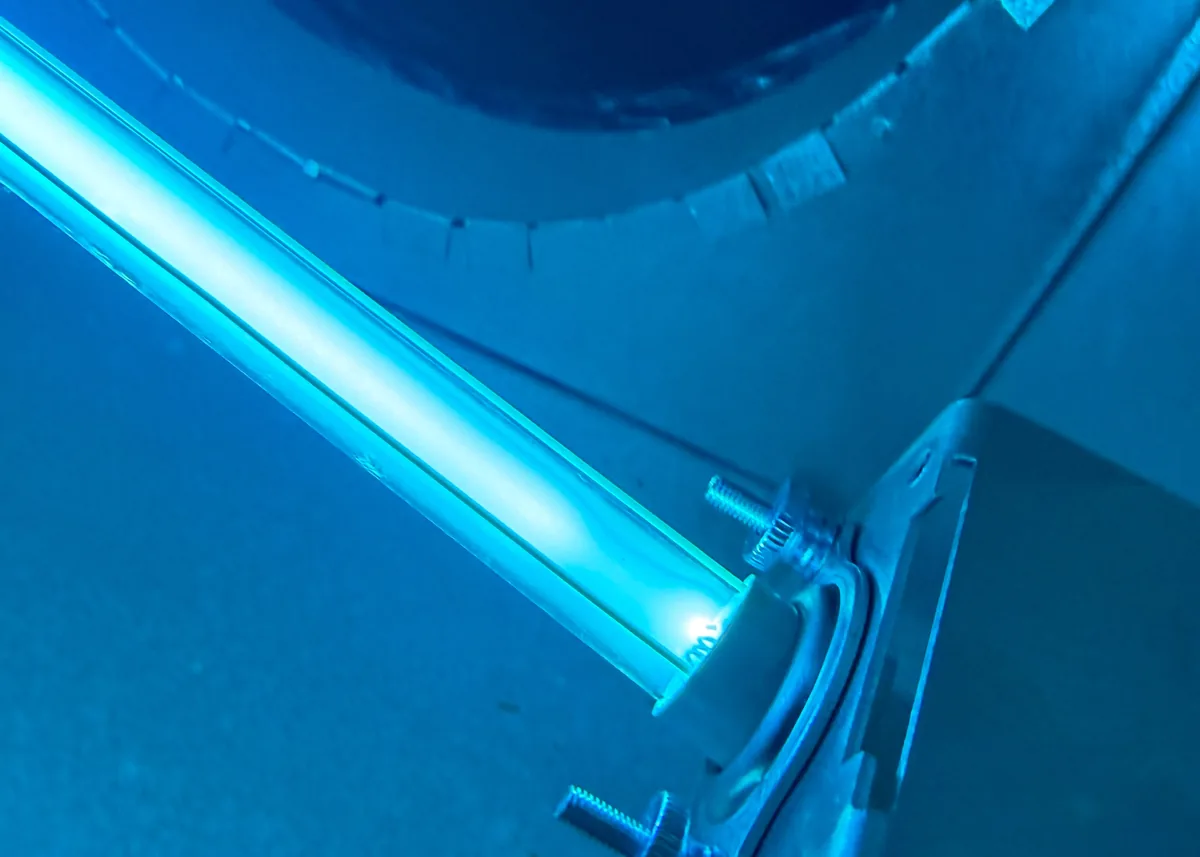
The UV lights installed in HVAC systems use a specific band of ultraviolet light called UV-C. Unlike the UV-A and UV-B rays in sunlight, UV-C is almost entirely filtered out by the atmosphere — and it happens to be extremely effective at damaging the DNA of microorganisms. When bacteria, mold spores, and viruses pass close to a UV-C lamp, the light disrupts their ability to reproduce, effectively neutralizing them.
In residential systems, the lamp is mounted inside the ductwork or air handler — most commonly right at the evaporator coil, where the system is coolest and dampest. It runs quietly around the clock, treating the air and surfaces your system touches every time the blower runs.
Why the evaporator coil is the main target
Your air conditioner's evaporator coil is a cold, wet, dark surface that every cubic foot of your home's air passes across — which makes it the single most mold-friendly spot in the whole system. When biofilm and mold build up on the coil, two things happen: your home develops a musty smell that returns no matter how much you clean, and the coil's efficiency drops because the buildup insulates it from the air it's supposed to cool.
A UV lamp aimed at the coil keeps that surface continuously sterilized. This is the most proven, best-documented benefit of HVAC UV lights: keeping the coil clean protects air quality and system efficiency at the same time.
What UV light does NOT do
This is the part many companies skip, and it matters. UV-C neutralizes living microorganisms — it does not remove anything from your air or your ducts. Dust, pet dander, pollen, construction debris, and the dead microbes themselves still need to be physically removed. UV light also can't reach contamination buried deep in duct insulation or settled in long horizontal runs.
- UV light does not replace duct cleaning — it complements it.
- UV light does not filter particles — that's your filter's job.
- A UV lamp loses strength over time — bulbs need replacement, typically every 1–2 years.
The right way to think about it: duct cleaning is the reset button that removes what's already in the system, and UV light is the guard that keeps biological growth from coming back between cleanings.
When a UV light makes sense for your home
Based on what we see in California homes, UV lights deliver the most value when at least one of these is true: someone in the home has allergies or asthma that flare when the AC runs, the home has had coil mold or persistent musty odors before, the system runs many hours a day (coastal humidity plus heavy summer cooling), or the home recently had its ducts professionally cleaned and you want to protect that investment.
Installation is a job for a technician — the lamp needs correct placement to be effective, a safe electrical connection, and positioning that protects plastic components from UV exposure. UV-C is also genuinely harmful to eyes and skin at close range, so the lamp must be installed where it cannot be viewed directly.
Key takeaways
- UV-C light neutralizes mold, bacteria, and viruses at your system's most vulnerable spot — the evaporator coil
- It keeps systems cleaner and helps with musty odors, but it removes nothing — pair it with duct cleaning
- Bulbs weaken with age and should be replaced every 1–2 years
- Best fit: allergy-sensitive households, humid coastal homes, and systems with a history of coil mold
Curious whether a UV light fits your system? We'll give you a straight answer during a free estimate.
Keep reading
Why an Annual Air Duct Checkup Is Worth It in California
Dust, wildfire smoke, pets and leaks build up in California ductwork faster than you think. Here's what an ann…
Read article → 5 min readDryer Lint: The Fire Hazard Hiding in Your Laundry Room
A lint-clogged dryer vent is one of the most preventable causes of house fires. Learn the warning signs and th…
Read article →